
The famous bomber’s Memphis stop tied the city name to a nationally celebrated World War II aircraft and drew major public attention.
When the Memphis Belle came home in June 1943, it was more than a famous bomber making a victory lap. The B-17 had completed 25 combat missions over Europe, a milestone that made it a national symbol at a moment when survival rates for bomber crews were grim. Our Memphis History notes that the plane returned to the United States on June 10, 1943 to begin a war-bond tour, while the National Museum of the U.S. Air Force says the aircraft and crew were chosen for a widely publicized, 30-plus-stop bond and morale tour meant to showcase the strategic bombing campaign and strengthen support on the home front. By the time the Belle reached Memphis, the city was greeting not just a machine, but a ready-made wartime legend.
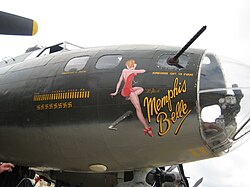
The Memphis stop mattered because it fused national propaganda, local pride, and genuine emotion into one event. Our Memphis History reports that the Belle stopped in Memphis from June 19 to June 22, 1943, where pilot Robert K. Morgan was reunited with Margaret Polk, the young Memphian for whom the plane was named. That personal story helped turn the aircraft into something more than military hardware: it became a hometown romance, a civic celebrity, and a patriotic fundraising tool all at once. The Air Force Museum’s account adds that the tour drew large crowds and helped make the crew national celebrities, which helps explain why the Memphis visit resonated so strongly in local memory.
What makes the Memphis Belle’s bond stop worth remembering now is that it captured how wartime cities were asked to see themselves. Memphis was not a battlefield, but during those June days it became part of the war narrative anyway: citizens bought bonds, posed with a battered combat veteran of the skies, and watched their city’s name circulate through newspapers and newsreels. The plane’s fame only grew afterward, through William Wyler’s wartime documentary and decades of preservation efforts, but the Memphis stop was the moment when the Belle’s story became inseparable from Memphis’s own identity. It was a homecoming, a fundraising drive, and a piece of civic mythmaking all at once.
Sources: Our Memphis History; National Museum of the U.S. Air Force; Rhodes College history materials; U.S. National Archives.